Eye Doctor Pembroke Pines

This guide provides a comprehensive overview of essential eye care services and local considerations for residents of Pembroke Pines, Florida. It maps the eye care landscape across different neighborhoods, detailing service availability, including routine exams, specialized pediatric services, and insurance acceptance across Central, West, East, and South Pembroke Pines areas. 

Eye Doctor in Pembroke Pines Florida

This guide provides comprehensive information on family eye care services in Pembroke Pines, FL, emphasizing the crucial link between eye health understanding and proactive local care. It systematically covers foundational concepts, including the detection of common conditions like dry eyes and myopia through comprehensive exams tailored to all ages, from pediatric to adult needs.

Optometrist in Pembroke Pines

This content provides a comprehensive guide to navigating eye care options in Pembroke Pines, FL, with a focus on family-oriented and accessible optometry services. It details the local provider landscape through a comparison table, evaluating clinics like Family Eye Site based on same-day availability, specialties (e.g., pediatric and diabetic exams), and insurance acceptance.

Eye Doctor Pembroke Pines FL

This document provides a comprehensive guide to finding and utilizing Eye Doctor Pembroke Pines FL services, specifically focusing on family-oriented optometry. It begins by mapping the local Eye Care Landscape in Pembroke Pines, comparing providers like The Family Eye Site, Pines Vision, and others based on specialty, accessibility, and pediatric care using an in-depth table. 

Optometrist Pembroke Pines

This content provides a comprehensive guide to finding and utilizing optometry services in Pembroke Pines, FL, focusing on the needs of local families. It begins by mapping the area's eye health landscape, detailing common ocular conditions driven by regional climate and digital strain, and comparing local providers, with a specific table highlighting the comprehensive, family-focused approach of practices like The Family Eye Site. 

Eye Center Pembroke Pines

This detailed guide provides Pembroke Pines residents with essential information about local eye care, focusing on The Family Eye Site. It begins with an 'Overview of Eye Care in Pembroke Pines Area,' including a comparison table detailing accessibility and services across key neighborhoods (Central, West, East, Southwest Pines), ensuring residents find the most convenient location.

Optometrist Pembroke Pines FL

This guide provides a comprehensive overview of family vision health and optometry services in Pembroke Pines, FL, with a focus on delivering patient-centered, accessible care for local residents. It analyzes the area's eye care landscape, comparing local optometry centers and highlighting the comprehensive, family-focused approach of The Family Eye Site.

Eye Care Pembroke Pines

This guide provides a comprehensive overview of eye care options and services available in Pembroke Pines, Florida, specifically targeting the needs of local families and residents. It begins by exploring the diverse eye care landscape, profiling major providers like The Family Eye Site, LensCrafters, and Pines Vision Center, complete with a comparative analysis of their core services, specialties, and insurance acceptance typical of Broward County.

Eye Center in Pembroke Pines

This content provides a comprehensive guide to eye care services in Pembroke Pines, Florida, specifically targeting the local search intent for an 'Eye Center in Pembroke Pines' and 'Pembroke Pines optometrist.' It maps the local eye health landscape, detailing prevalent conditions influenced by demographics and climate, and compares local providers across key neighborhoods like Chapel Trail and Century Village using a structured table.

Eyeglasses in Pembroke Pines

This content provides a comprehensive guide to obtaining high-quality and affordable eyewear in Pembroke Pines, FL, focusing on the local market landscape and the personalized services offered by Family Eye Site. It begins by outlining the competitive optical environment, comparing local providers—including major chains—with Family Eye Site to highlight differences in eye exam availability, eyewear options, and pricing for prescription glasses in Pembroke Pines FL.

How is Eye Pressure Measured?

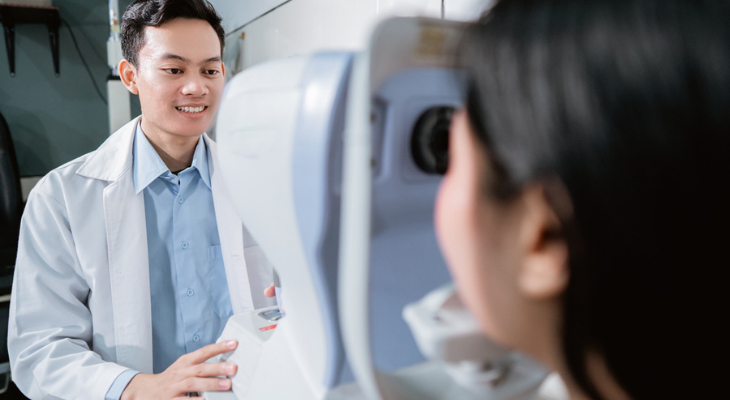
Eye doctor doing an exam

Testing Your Eye Pressure

High pressure inside your eyes increases your risk of glaucoma, a disease that can cause vision loss. Although you can't tell when your eye pressure is rising, a simple test conducted at your optometrist's office helps your eye doctor detect and treat pressure changes.

Why It's Important to Keep Your Pressure Under Control

Your eye is filled with a clear fluid called aqueous humor that delivers nutrients to the cornea and lens and removes waste products. The pressure produced by the fluid helps your eyes keep their round shape.

Drainage channels constantly remove old aqueous humor and make room for a new supply of fluid. If the drainage channels become blocked, your eye pressure rises, which can cause optic nerve damage.

The optic nerve carries electrical impulses from your eyes to your brain. Once the impulses reach the brain, they're processed and transformed into images. If the optic nerve becomes damaged by high pressure inside your eyes, the impulses may not reach your brain. This can cause partial or complete vision loss.

Unfortunately, you probably won't notice any symptoms if you have a common type of glaucoma called open-angle glaucoma. Despite the lack of symptoms, open-angle glaucoma can slowly damage your vision. Angle-closure glaucoma, the more severe form of the condition, occurs suddenly and does cause symptoms. Symptoms of angle-closure glaucoma include pain, sudden loss of vision, nausea, headache, halos around lights, and blurry vision.

So how high is too high when it comes to eye pressure? The American Academy of Ophthalmology reports that pressure between 10 and 21 millimeters of mercury (mmHg) is normal and anything above that is too high. Some people who have eye pressure that's technically in the normal range may also be at risk of developing glaucoma.

3 Ways to Test Eye Pressure

Eye doctors use several methods to test eye pressure, including:

  • Non-Contact Tonometry. Commonly called the "air puff" test, non-contact tonometry measures how much your corneas flatten when exposed to a burst of air. While you look at a light, a puff of air flattens your cornea. Generally, the more force needed to flatten the cornea, the higher the pressure inside your eye.
  • Goldmann Applanation Tonometry. Before this test begins, your eye doctor puts drops in your eyes that numb them and also adds a few drops of a blue dye. After your eye is numb, your doctor looks in your eyes with a special machine called a slit-lamp microscope. You'll notice a glowing blue light that makes the dye added to your eyes visible. The test is conducted by pressing the tip of a small probe against your cornea. The tonometer measures how much pressure it takes to flatten the cornea.
  • Electronic Tonometry. An electronic tonometer looks a little like a pen. During the test, the device is briefly held against your eye after it's numbed with eye drops. Your eye pressure reading appears on a small screen on the device.

What Happens If Your Pressure Is High

A higher-than-normal pressure reading doesn't necessarily mean that you have glaucoma. Some people naturally have higher pressure readings than others, yet have no damage to their optic nerves.

If you have a high eye pressure reading, your eye doctor will take a close look at your optic nerve. Dilating your pupil with special drops makes it possible to view the optic nerve and spot damage. They may also take a few pictures of the nerve. In addition to checking out your optic nerve, your eye doctor measures the thickness of your corneas. A thick cornea could make your pressure measurement seem higher than it really is. As part of your examination, your eye doctor will also test your side vision and check to see if the drainage channels inside your eye are blocked.

If your pressure is too high, you may need one or more of these glaucoma treatments:

  • Eye drops to decrease pressure
  • Laser eye surgery to improve drainage
  • Traditional eye surgery if laser therapy isn't helpful

Annual eye examinations and eye pressure tests help you protect your eyesight and ensure that you get the treatment you need should you ever develop glaucoma. Contact us to schedule your next comprehensive eye examination.

Sources:

Bright Focus Foundation: How Is Eye Pressure Measured?

American Academy of Ophthalmology: Eye Pressure Testing, 2/26/18

All About Vision: Do I Have to Get the Air Puff Test, 10/21

Glaucoma Research Foundation: The Importance of Corneal Thickness, 10/29/17

The Family Eye Site

Address

18503 Pines Blvd STE 205,
Pembroke Pines, FL 33029

Contact Us