Eye Doctor Pembroke Pines

This guide provides a comprehensive overview of essential eye care services and local considerations for residents of Pembroke Pines, Florida. It maps the eye care landscape across different neighborhoods, detailing service availability, including routine exams, specialized pediatric services, and insurance acceptance across Central, West, East, and South Pembroke Pines areas. 

Eye Doctor in Pembroke Pines Florida

This guide provides comprehensive information on family eye care services in Pembroke Pines, FL, emphasizing the crucial link between eye health understanding and proactive local care. It systematically covers foundational concepts, including the detection of common conditions like dry eyes and myopia through comprehensive exams tailored to all ages, from pediatric to adult needs.

Optometrist in Pembroke Pines

This content provides a comprehensive guide to navigating eye care options in Pembroke Pines, FL, with a focus on family-oriented and accessible optometry services. It details the local provider landscape through a comparison table, evaluating clinics like Family Eye Site based on same-day availability, specialties (e.g., pediatric and diabetic exams), and insurance acceptance.

Eye Doctor Pembroke Pines FL

This document provides a comprehensive guide to finding and utilizing Eye Doctor Pembroke Pines FL services, specifically focusing on family-oriented optometry. It begins by mapping the local Eye Care Landscape in Pembroke Pines, comparing providers like The Family Eye Site, Pines Vision, and others based on specialty, accessibility, and pediatric care using an in-depth table. 

Optometrist Pembroke Pines

This content provides a comprehensive guide to finding and utilizing optometry services in Pembroke Pines, FL, focusing on the needs of local families. It begins by mapping the area's eye health landscape, detailing common ocular conditions driven by regional climate and digital strain, and comparing local providers, with a specific table highlighting the comprehensive, family-focused approach of practices like The Family Eye Site. 

Eye Center Pembroke Pines

This detailed guide provides Pembroke Pines residents with essential information about local eye care, focusing on The Family Eye Site. It begins with an 'Overview of Eye Care in Pembroke Pines Area,' including a comparison table detailing accessibility and services across key neighborhoods (Central, West, East, Southwest Pines), ensuring residents find the most convenient location.

Optometrist Pembroke Pines FL

This guide provides a comprehensive overview of family vision health and optometry services in Pembroke Pines, FL, with a focus on delivering patient-centered, accessible care for local residents. It analyzes the area's eye care landscape, comparing local optometry centers and highlighting the comprehensive, family-focused approach of The Family Eye Site.

Eye Care Pembroke Pines

This guide provides a comprehensive overview of eye care options and services available in Pembroke Pines, Florida, specifically targeting the needs of local families and residents. It begins by exploring the diverse eye care landscape, profiling major providers like The Family Eye Site, LensCrafters, and Pines Vision Center, complete with a comparative analysis of their core services, specialties, and insurance acceptance typical of Broward County.

Eye Center in Pembroke Pines

This content provides a comprehensive guide to eye care services in Pembroke Pines, Florida, specifically targeting the local search intent for an 'Eye Center in Pembroke Pines' and 'Pembroke Pines optometrist.' It maps the local eye health landscape, detailing prevalent conditions influenced by demographics and climate, and compares local providers across key neighborhoods like Chapel Trail and Century Village using a structured table.

Eyeglasses in Pembroke Pines

This content provides a comprehensive guide to obtaining high-quality and affordable eyewear in Pembroke Pines, FL, focusing on the local market landscape and the personalized services offered by Family Eye Site. It begins by outlining the competitive optical environment, comparing local providers—including major chains—with Family Eye Site to highlight differences in eye exam availability, eyewear options, and pricing for prescription glasses in Pembroke Pines FL.

Keratoconus

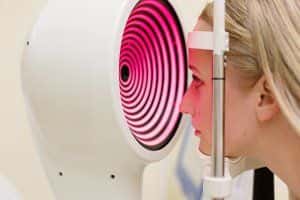
woman undergoing cornea curvature testing

While keratoconus can happen at any stage of life, young people between the ages of 10 and 25 are most likely to develop this disorder. For individuals with keratoconus, their cornea, the clear layer in the front of your eye, gradually thins and begins to bulge outward. Keratoconus typically causes nearsightedness and astigmatism in both eyes.

The first signs of keratoconus are rapid changes in vision that require frequent adjusting of prescription lenses. Other symptoms include increased sensitivity to light, eyes strain and irritation, halos around lights at night, headaches and an incessant urge to rub your eyes. Eventually, the corneas become noticeably cone shaped.

Keratoconus is the most common type of corneal dystrophy, or degenerative corneal disorder. It affects one in every 2,000 Americans, according to the National Eye Institute.

Diagnosis

Many symptoms of keratoconus are similar to those of other corneal disorders, especially during the onset of the condition. This makes keratoconus difficult to diagnose.

Nonetheless, to diagnose keratoconus, ophthalmologists use a slit lamp to inspect your cornea at the microscopic level. Telltale signs of keratoconus include corneal thinning, an iron-colored ring around the cone-shaped cornea, stress lines and scarring at the top of the cone. Your eye doctor will also use instruments and lights to measure the curvature of your cornea.

Causes and Risk Factors

Researchers are not exactly sure why some people develop keratoconus. Leading theories center on genetics, environment and hormones. Some scientists have noted a slightly higher chance of developing keratoconus if a family member has it, but this correlation has not been proven with absolute certainty. Possible environmental causes include allergies that lead to excessive eye rubbing or poorly fitted contact lenses. Some researchers hypothesize that keratoconus is related to the endocrine system (the collection of glands that secrete certain hormones), because the onset often happens at puberty and worsens during pregnancy.

Treatment

Usually, the cornea stabilizes, so vision can be corrected with glasses or contacts. But between 10 and 20 percent of people with keratoconus will have more severe problems that require an alternative form of treatment, such as the following

Corneal Crosslinking. Healthy corneas keep their shape because cross-linked collagen fibers serve as supports. Corneal collagen cross-linking (CXL) involves saturating the cornea with riboflavin drops and activating them with an ultraviolet light. This strengthens the cornea by increasing the amount of collagen cross-linking. While CXL doesn’t cure keratoconus, it can arrest the progress of the disorder.

Intacs Surgery. Your eye doctor may suggest inserting Intacs, extremely thin plastic semi-circles. These flatten the cornea, improving vision. You may or may not still need to wear prescription lenses after Intacs surgery.

Corneal transplant. If keratoconus progresses until the cornea is too thin or scarred to tolerate contacts, your ophthalmologist may recommend a corneal transplant. According to the National Eye Institute, this operation is successful in more than 90 percent of those suffering from advanced keratoconus.

If you are experiencing signs of keratoconus, call us so we can diagnose your vision condition and suggest an appropriate plan of action for your visual needs.

The Family Eye Site

Address

18503 Pines Blvd STE 205,
Pembroke Pines, FL 33029

Contact Us